
Spaces that can feel us and transform in response to our emotions are the true embodiment of humanized architecture because it augments interactive architectural systems and makes it more relatable, natural, and simply human.
The Dystopia of Utopia

A Polymorphic Space

This research investigates our evolving relationship with architectural space, which has grown increasingly detached from lived experience due to mass production and the modern tendency to treat buildings as static objects rather than dynamic systems of interaction. In response, the project proposes a humanization of architecture through an interdisciplinary approach that engages nature’s behavioral patterns, reintroducing movement and reciprocity into the spatial experience.

Left: Scene from Playtime film by Jacques Tati, 1967.

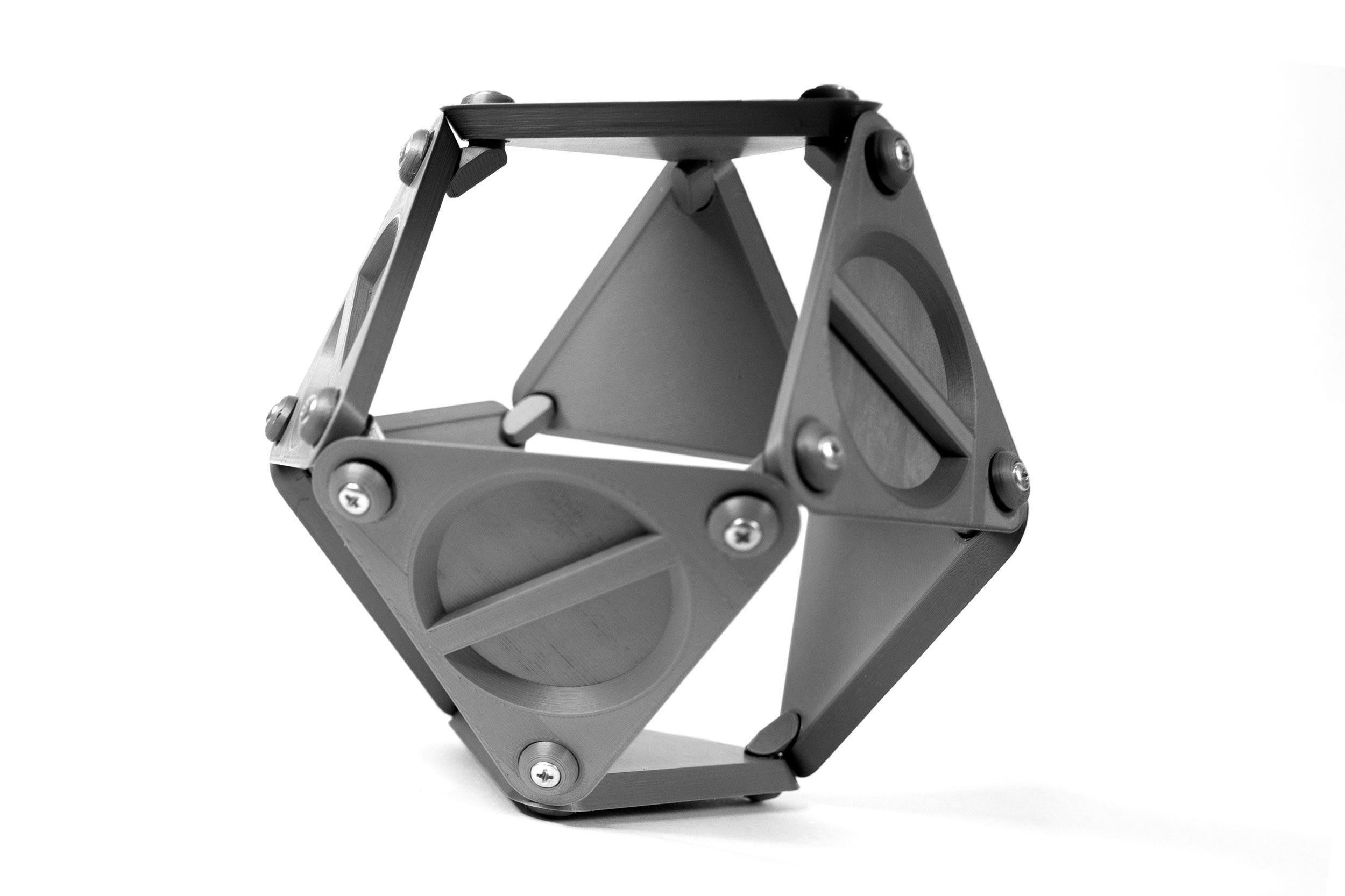
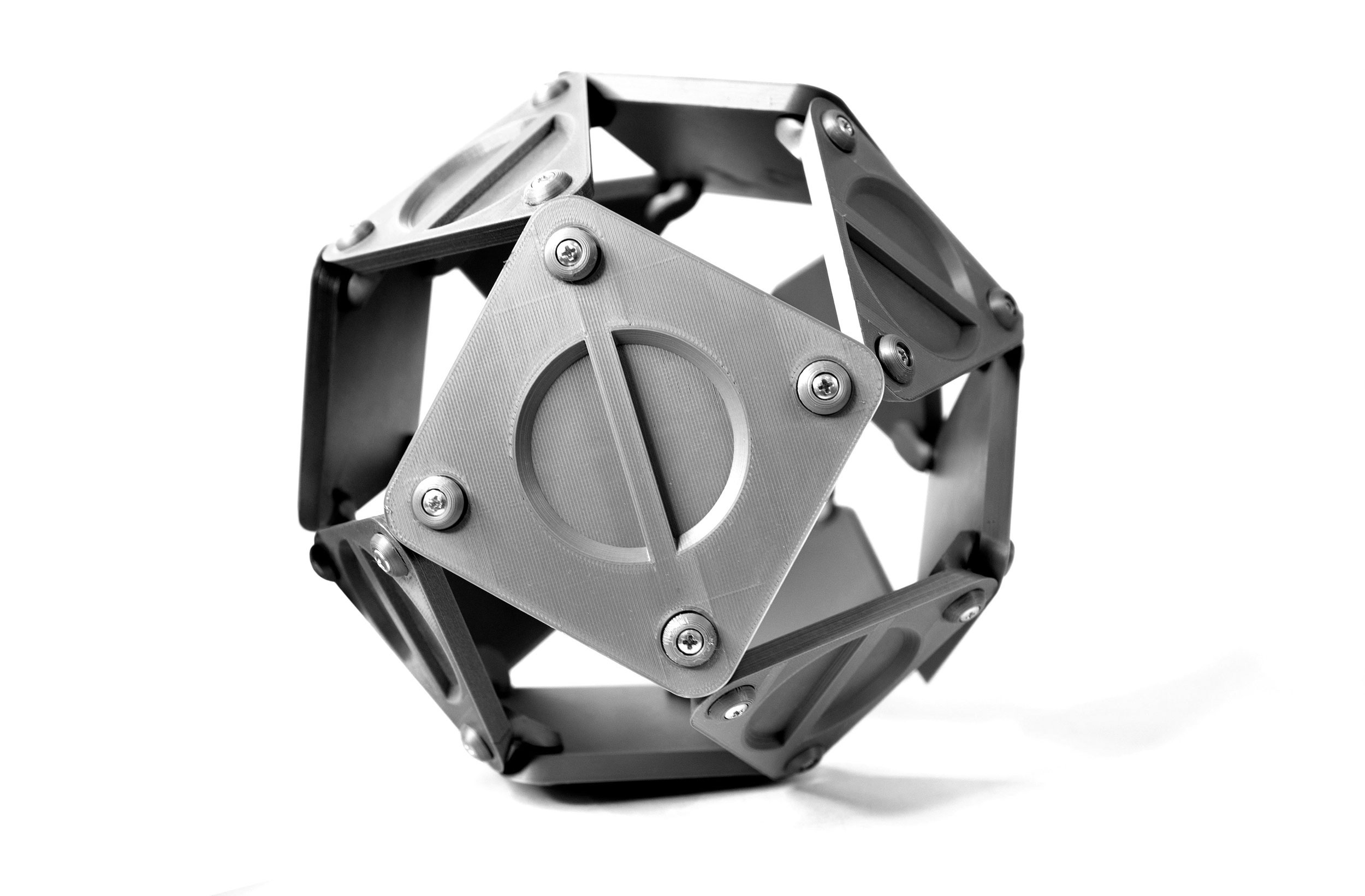
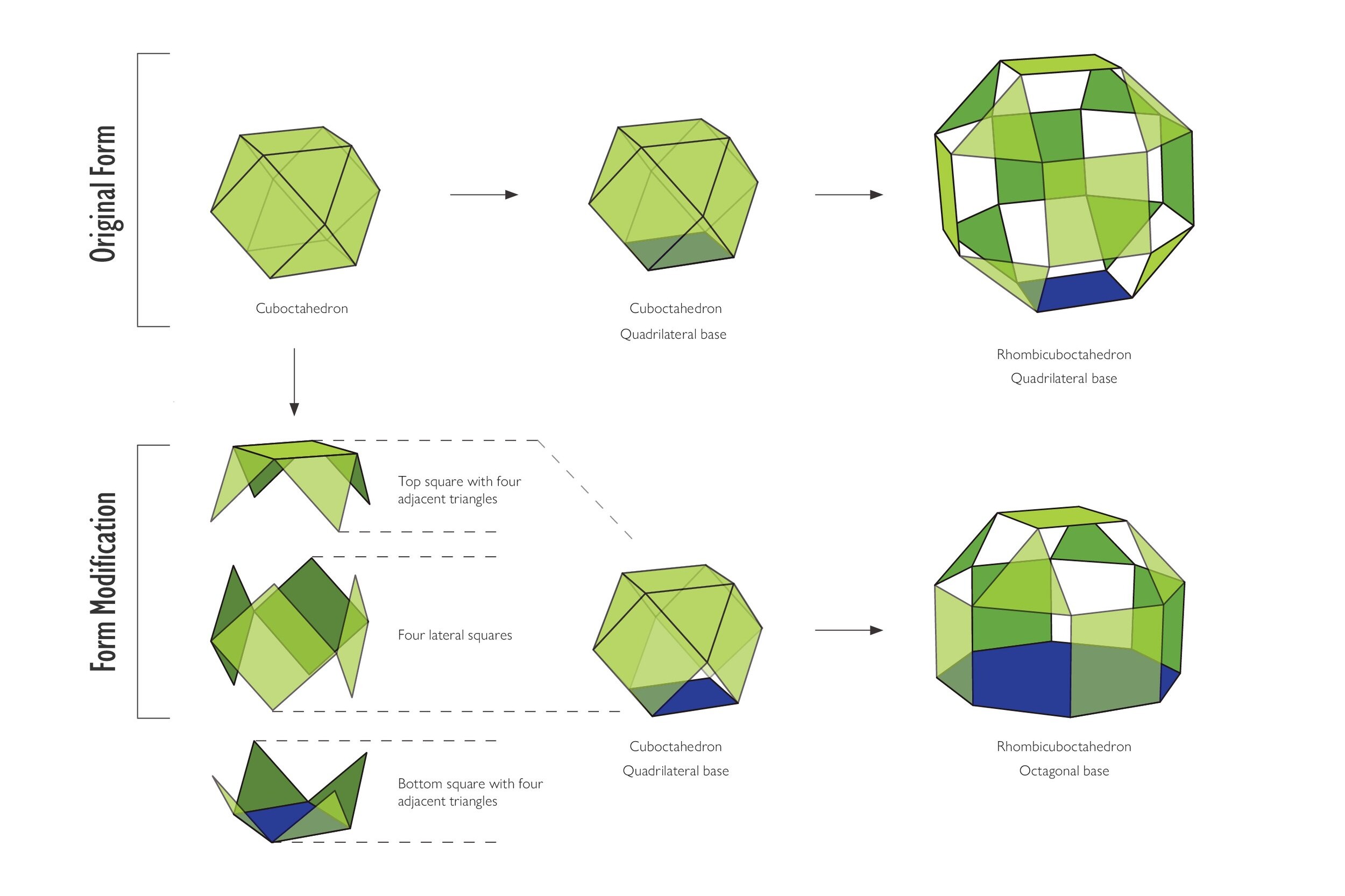
The objective of this investigation is to develop a morphing structure in which n which transformation occurs volumetrically, rather than a single planar element. This is pursued through the study of polyhedra: three-dimensional geometries defined by symmetrical configurations. The research focuses on transformable polyhedra, first introduced by Buckminster Fuller through the “Jitterbug” model. These Jitterbug-like transformers enable symmetrical expansion and contraction, producing volumetric variation while maintaining geometric coherence.

Polyhedrons Explorations

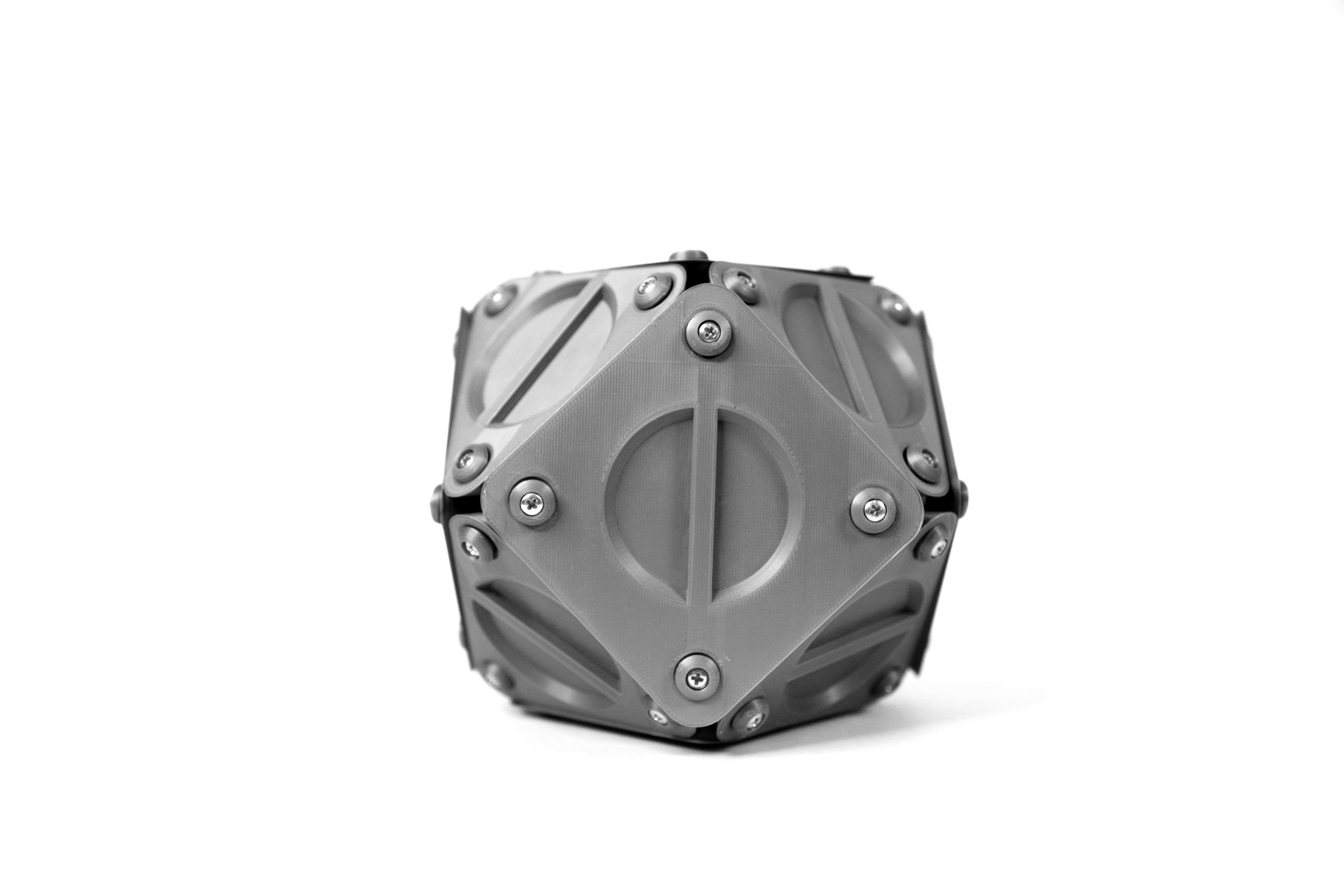
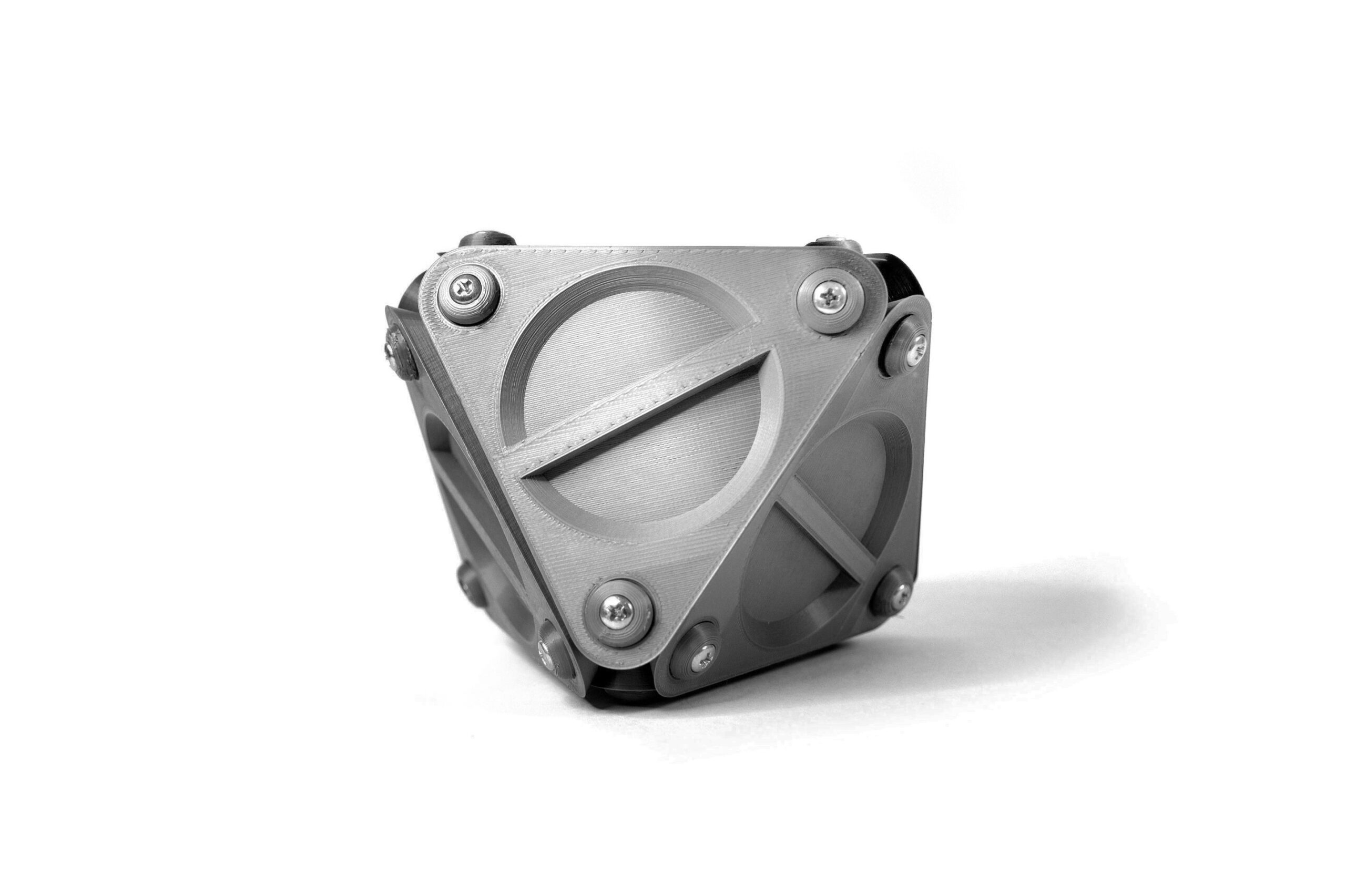
Contracted State

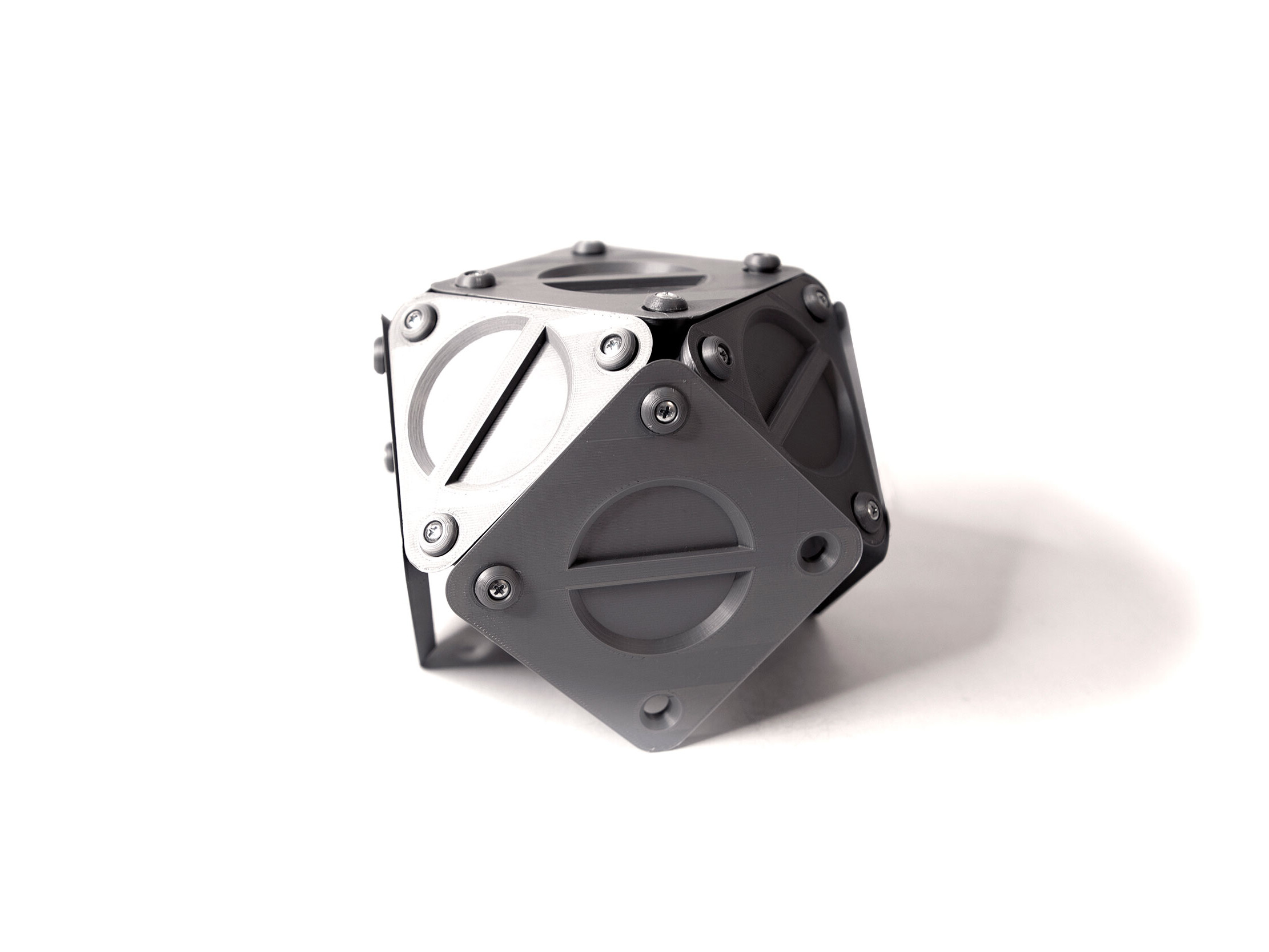
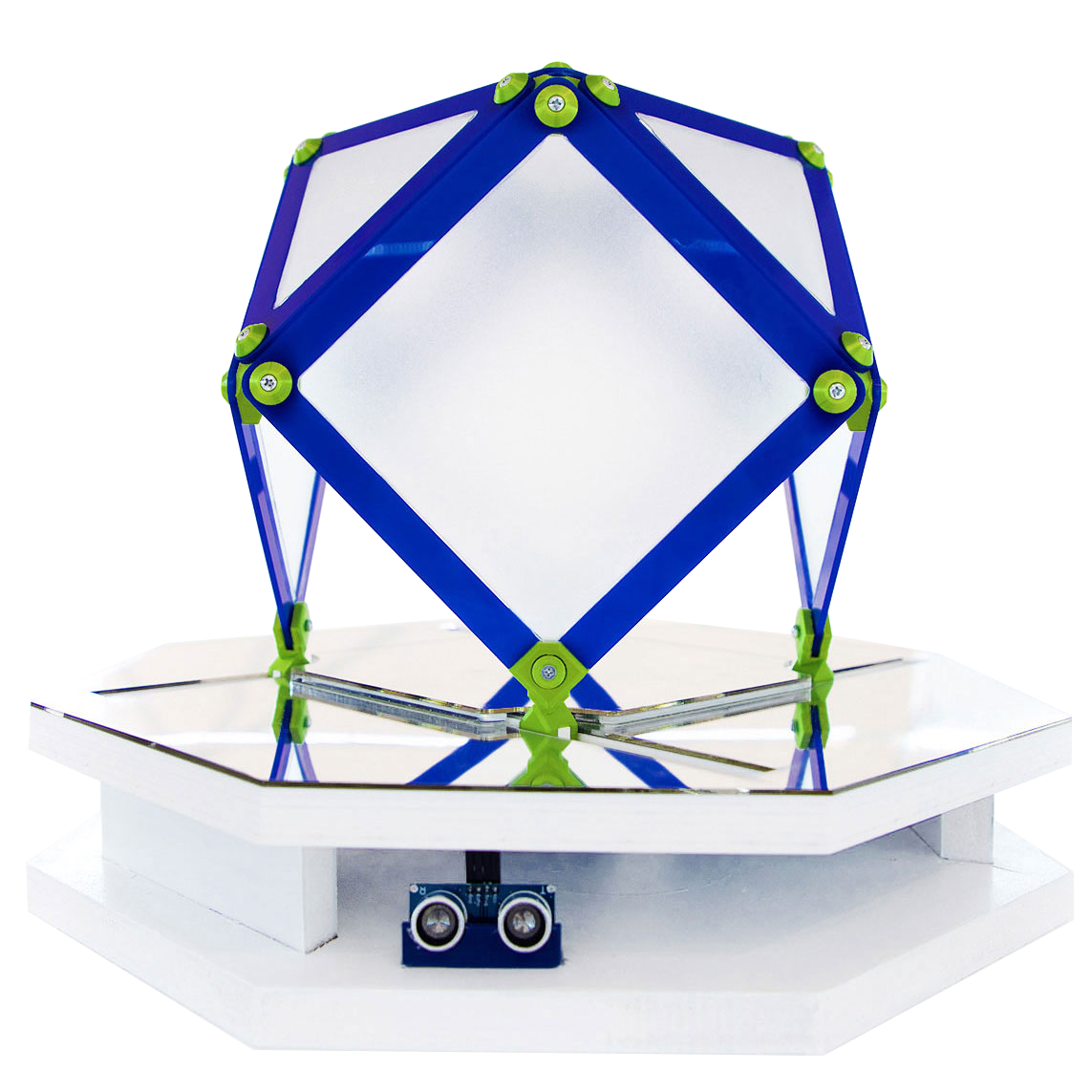
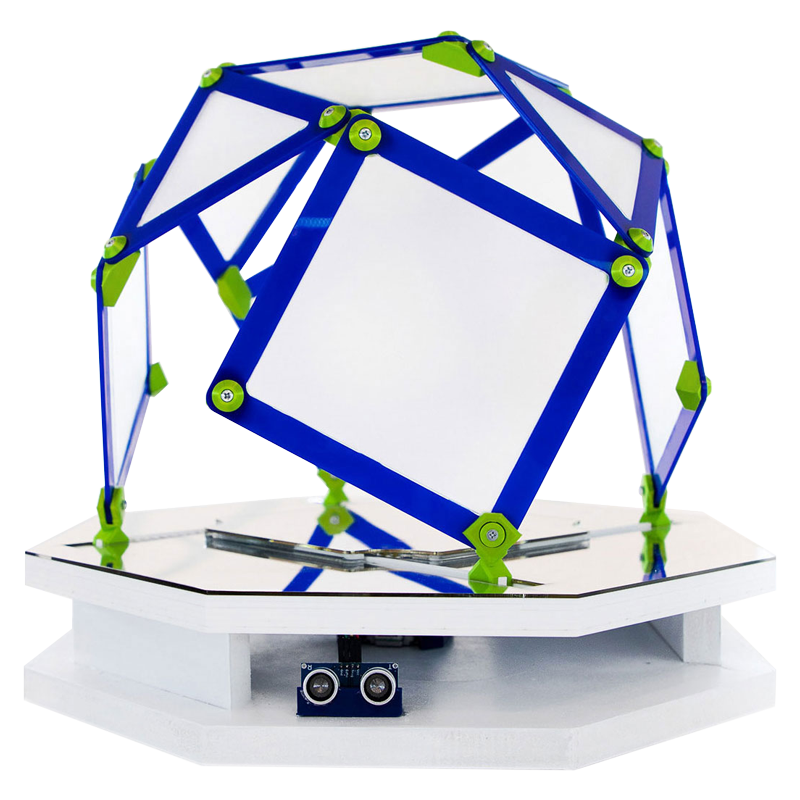
The downscaled structure is a conceptual model of an interactive, transformable space. In its contracted state, the structure is a cuboctahedron with a quadrilateral base, where four vertical squares shift radially while rotating at their connection to the horizontal plane.

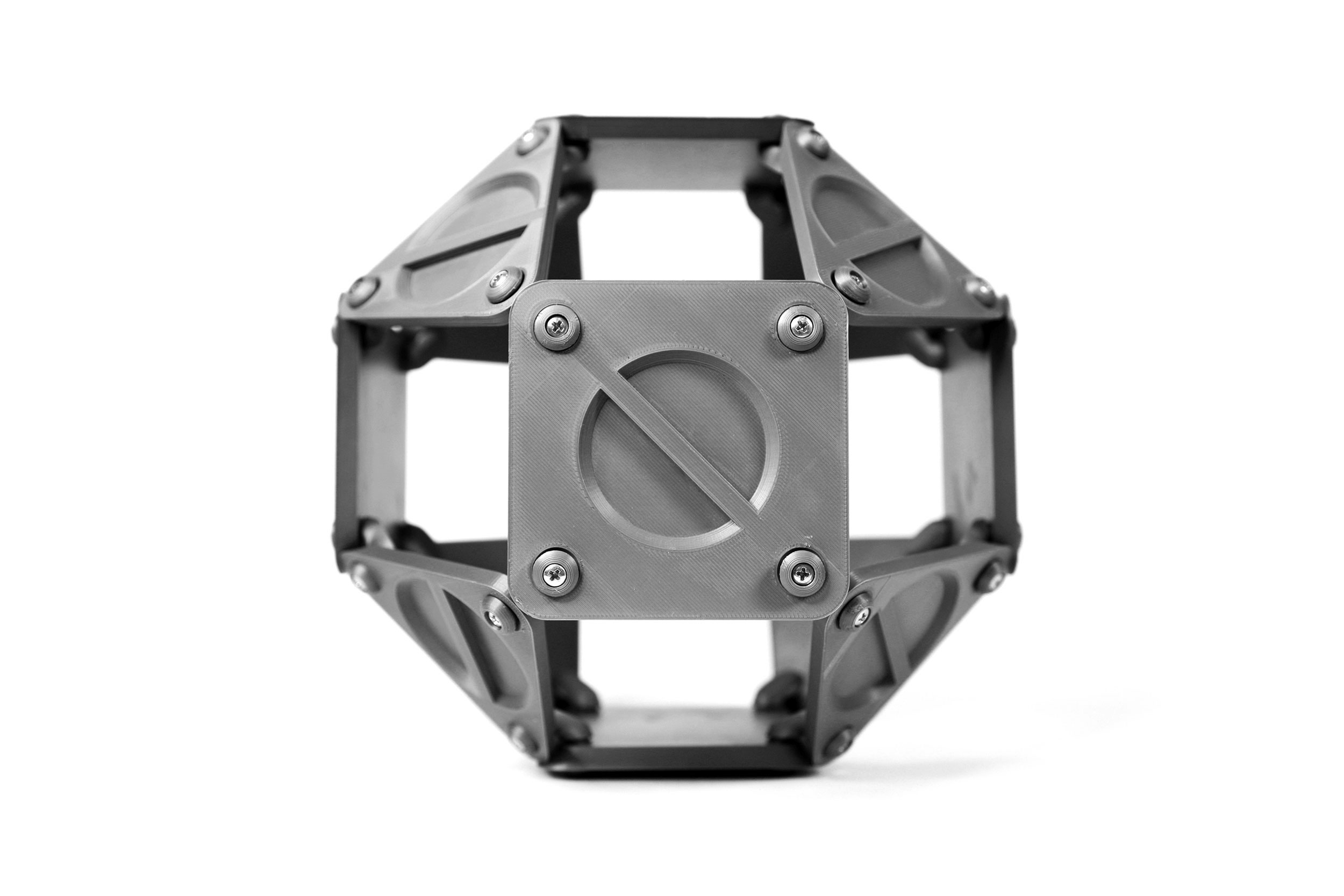
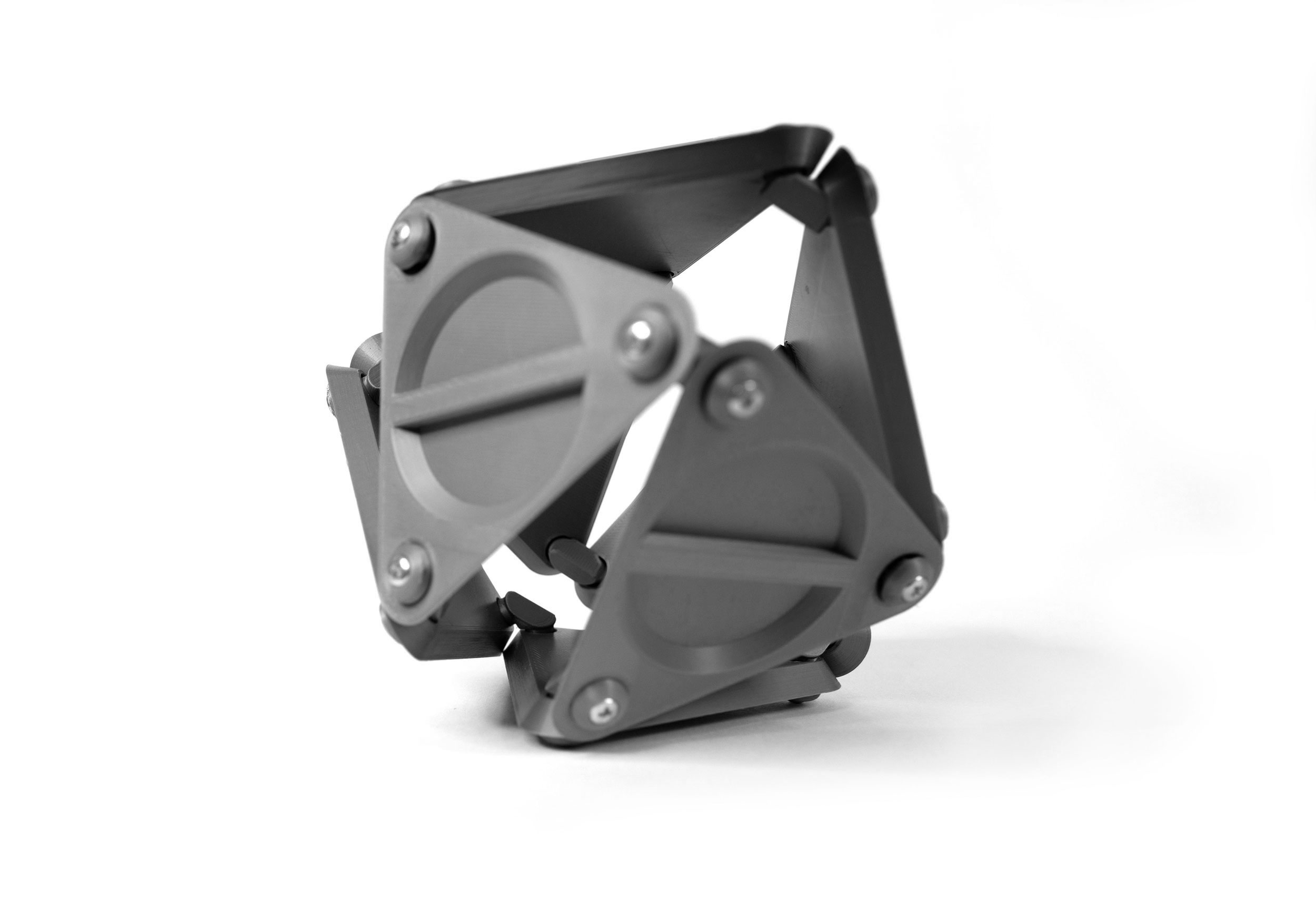
Expanded State

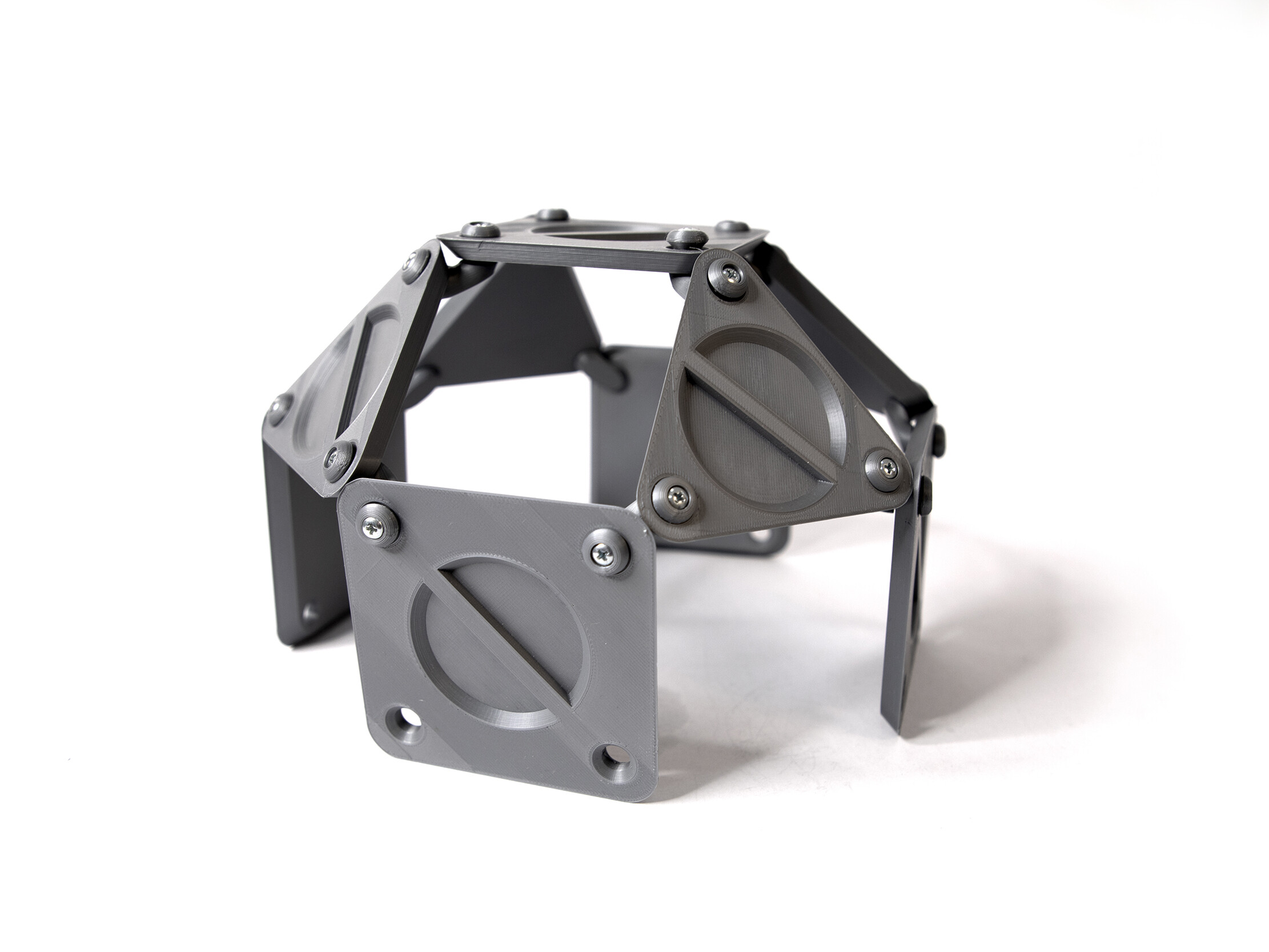
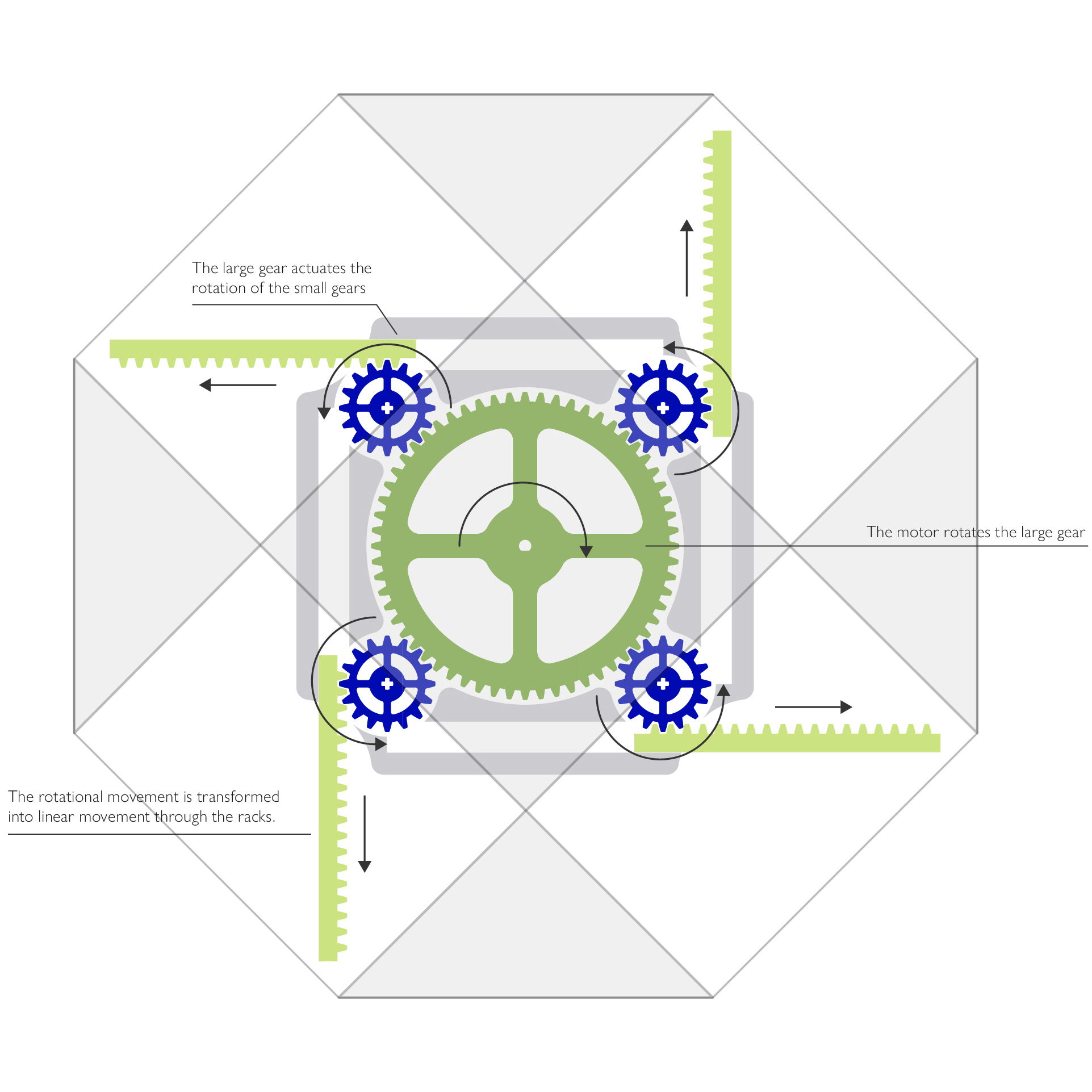
In its expanded state, the structure transforms into a rhombicuboctahedron with an octagonal base, achieving a 1:5 volumetric expansion ratio between states. The structure is activated by a motor-powered rack-and-pinion system through embedded racks extending from the inner to the outer vertices of the base.
Privacy Preference Center